What is LEGO® SERIOUS PLAY®?
A facilitated method for thinking, communicating and solving complex problems.
The LEGO® SERIOUS PLAY® method is a facilitated thinking, communication and problem-solving technique for organisations, teams and individuals. It uses LEGO® bricks and three-dimensional model building to help people give form to ideas, explore different perspectives and develop a deeper understanding of complex issues.
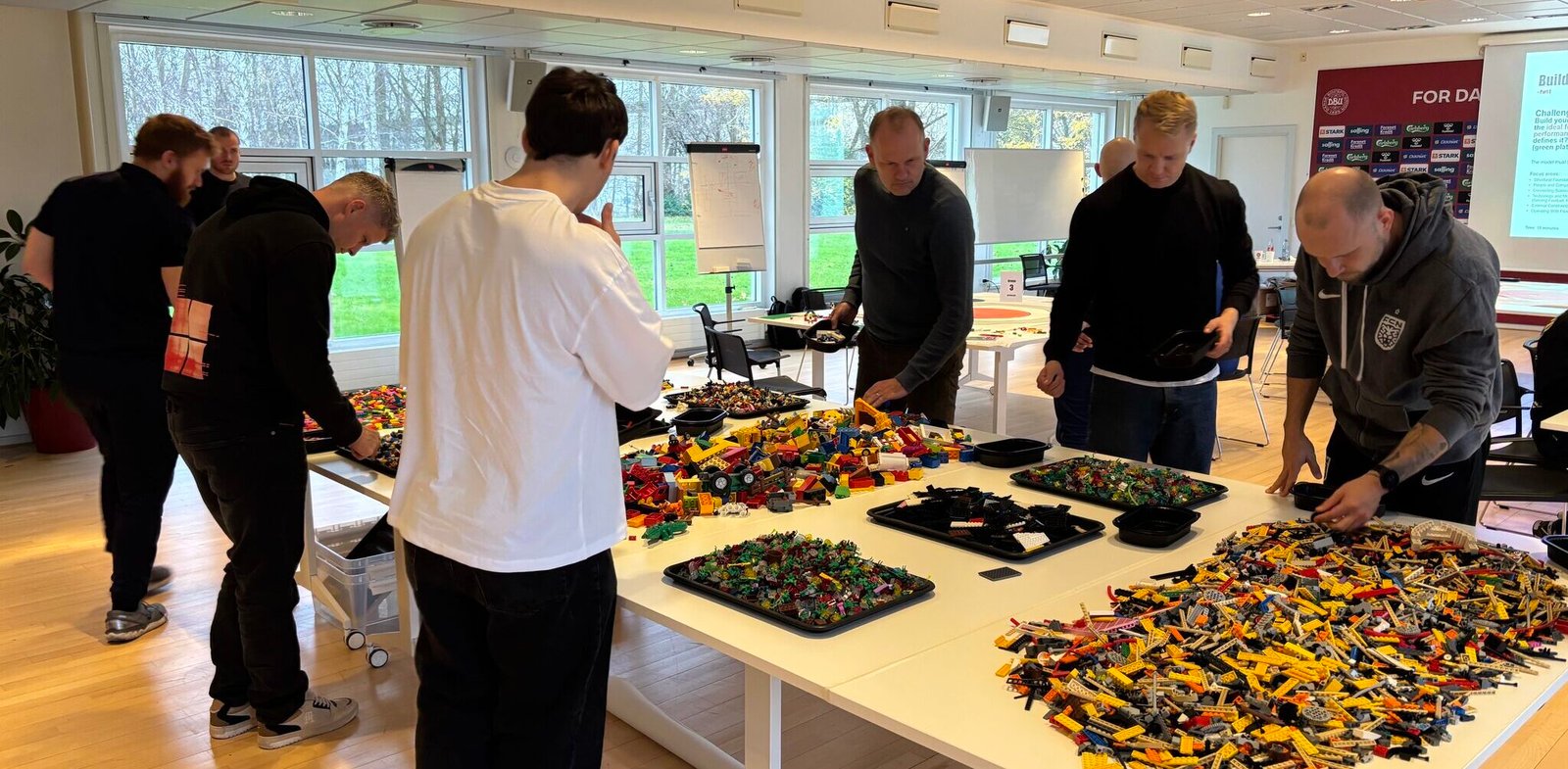
Unlike an approach based primarily on verbal discussion, LEGO® SERIOUS PLAY® creates a structured process in which participants build, explain and reflect. Ideas that may otherwise remain abstract, difficult to articulate or understood differently by different people can become tangible objects that the group can examine together.
What LEGO® SERIOUS PLAY® means for organisations?
In an organisational setting, LEGO® SERIOUS PLAY® is used with leadership teams, cross-functional groups and individuals to explore questions involving strategy, relationships, roles, challenges and opportunities. Participants can build three-dimensional representations of ideas, relationships, constraints and possibilities, creating a shared basis for exploring what is actually happening and what could happen next.
The method is grounded in a particular view of organisations and leadership: leaders do not have all the answers; people want to contribute and take ownership; and organisations operate in complex, adaptive environments where valuable knowledge can remain untapped.
Origin and ‘thinking-through-the-hands’ approach
The methodology originated within the LEGO Group in the late 1990s. It emerged from work exploring alternative approaches to strategic planning and organisational thinking rather than as an entertainment or team-building activity.
Its foundation draws on research and ideas from business, organisational development, psychology and learning, including the concept of “thinking through the hands” or hand knowledge. The act of physically building gives participants another way to process and express ideas, allowing thoughts, metaphors and relationships to be externalised rather than held only in the mind or expressed through immediate verbal discussion. This can be particularly valuable when people are dealing with concepts such as trust, risk, dependency, tension or uncertainty that may be difficult to describe precisely in words.
Why LEGO® SERIOUS PLAY® works in practice
The method creates a structured connection between building, reflection, explanation and shared meaning. Participants do not simply state an opinion; they construct a representation, explain what it means, listen to other interpretations and then consider how the different perspectives relate to one another.
This engages visual, spatial, verbal and hands-on ways of processing information. More importantly, it creates something tangible for people to examine together. A model can be pointed to, questioned, modified and connected to other models, making relationships and patterns easier to explore.
The process therefore moves thinking from an individual level towards a broader shared view of the situation.
The principle of psychological safety – there’s no right or wrong
A fundamental principle of LEGO® SERIOUS PLAY® is that there are no right or wrong answers during the building phase. Participants are not asked to produce the “correct” model; they are asked to create a model that represents their own thinking.
This creates space for different perspectives before they are evaluated or debated. Because participants can express an idea through what they build, rather than having to formulate and defend it immediately in a group discussion, perspectives that might otherwise remain unspoken can come forward.
Where LSP creates business value?
The method is particularly relevant when an organisation is dealing with ambiguity, complexity, misalignment or competing interpretations. Its applications include:
- Strategic alignment — exploring different views of direction, priorities and the factors influencing them.
- Leadership development — examining roles, expectations, decision patterns and systemic barriers.
- Team effectiveness — exploring relationships, interdependence and the conditions required for stronger collaboration.
- Innovation — developing and exploring possibilities beyond established assumptions.
- Culture and organisational change — making perspectives, relationships and underlying dynamics easier to explore.
- Complex problem-solving — creating a more tangible view of the relationships, constraints and dependencies surrounding an issue.
The central idea across these applications is consistent – when a complex issue is difficult to understand through words alone, making the thinking visible can create a stronger basis for understanding and action.
Ready When You Are
Change your organisation the better way
Bring us the challenge. We’ll explore whether LEGO® SERIOUS PLAY® is the right approach for you.